
Troops of India and China were locked in a standoff in Doklam from June 16, 2017 after the Indian side stopped the building of a road in the disputed area by the Chinese Army.

Is Bhutan merely experimenting with digital finance -- or is the Himalayan kingdom punching far above its weight, quietly playing one of the most sophisticated strategic games in Asia today? asks Varun Arya.

The exercise 'Hand-in-Hand' between the armies of the two countries will take place within next 4-5 months in China.

India on Thursday said it keeps a constant watch on all developments having bearing on national security, three days after new satellite images indicated the construction of a Chinese village east of the Doklam plateau on the Bhutanese side.
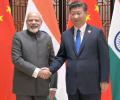
The Chinese and the Indian troops were engaged in a standoff for 73 days in Doklam.
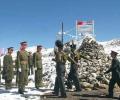
It said alongside the village is a neatly marked all-weather carriageway, which is part of China's "extensive land grab" in Bhutan.
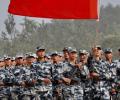
Sources said China has been slowly increasing its troop level in the Doklam Plateau.

The prime minister, accompanied by senior officials including National Security Advisor Ajit Doval and Foreign Secretary S Jaishankar, met the Chinese leader just before his travel to Myanmar from this port city.

India will maintain territorial integrity in Doklam, the Raksha Mantri said.
The force also stated that such incidents happen due to differing perceptions of the LAC and there are established mechanisms to resolve such differences.

The Defence Minister's reply came in response to a question on whether satellite images have revealed that China has constructed seven helipads in Doklam besides deploying tanks and missiles in the area.
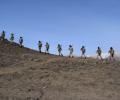
He said China was exercising sovereignty in its own territory.
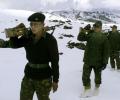
'The situation in Doklam has plateaued; militarily, the Chinese know they can do nothing here,' an Indian general tells Ajai Shukla.
On May 5, around 250 Indian and Chinese army personnel clashed with iron rods, sticks, and even resorted to stone-pelting in Pangong Tso lake area in Eastern Ladakh.

The External Affairs Minister said the Wuhan informal summit was held without any agenda and without having any objective to discuss any specific issue.
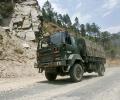
Some organisational changes are likely in some of the key army formations.
India's envoy had said that stand-off in Doklam saying it happened because Beijing tried to alter the "status quo" which it should not have.

In a statement, the Indian Army said the face-off was resolved by local commanders as per established protocols. The incident at Naku La became public on Monday hours after senior commanders of both the armies concluded a nearly 16-hour-long meeting in an attempt to defuse tension in eastern Ladakh.
He said India has held itself with dignity throughout the whole ordeal
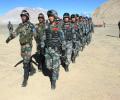
Indian and Chinese troops remained engaged in an eyeball-to-eyeball situation in several disputed areas.
He praised the Indian media for handling the issue in a "responsible" manner.

Troops of India and China were locked in a 73-day-long standoff in Doklam from June 16 last year after the Indian side stopped the building of a road in the disputed tri-junction by the Chinese army.

Modi will meet Xi at 12.30 pm (10 am IST).

'Chinese government, people and the military were angry over India's dangerous move in Doklam'
"After the tri-junction in Doklam in the Sikkim sector, this is the most important tri-junction along the Sino-India border."

He also said that the India-China standoff at Doklam is "not a very serious" issue
In 2005, the Border Road Organisation was asked to construct 73 roads in the strategically important regions along the Sino-India border but there has been huge delay in implementation of the project which has apparently left the army unhappy.

China, however, remained ambiguous about the status of its own troops.
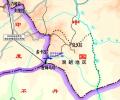
Chinese foreign ministry spokesman displayed the photographs of the alleged Indian "incursion" into the area during a media briefing.

Singh also said that Indian security forces were capable of defending the country's territories.
The envoy said Japan has been watching the situation "very closely" as it "can affect the stability of the entire region."
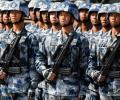
He called for delineation of the 3,488-km Line of Actual Control (LAC) which China has refused earlier.
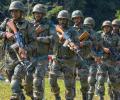
Military officials said India is also strengthening its surveillance mechanism to keep an eye on Chinese activities along the borders in the strategically sensitive Tibetan region and has even been regularly deploying choppers to carry out recce.

However, the government rejected the army's demand to implement the scheme with retrospective effect from June last year, when the Doklam face-off between Indian and Chinese armies had begun, official sources said.

The army chief said that radicalisation in Kashmir was being addressed with a "lot of seriousness"

India and China on Monday ended their standoff in Dokalam by withdrawing their troops from the area, just days before Prime Minister Narendra Modi's visit to China to attend the BRICS summit next week.

Beijing should remember the advice of its celebrated military strategist Sun Tzu: 'Fight not unless the position is critical.'
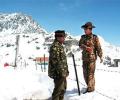
Ten days later, with the Indian Army in full control of the area where the incident took place, New Delhi has signalled a face-saver for Beijing.

At the border personnel meeting, China also accused the Indian side of damaging its road building equipment when a road laying party left its gear in Tuting in December last year following a protest by India.

Referring to the 73-day long Doklam standoff, the army chief warned that the situation could gradually snowball into a larger conflict on the northern border.
 © 2026 Rediff.com - Advertise with us - Disclaimer - Privacy Policy - Sitemap - Feedback - About us - Terms of use - Grievances